


Products
Quick Links
About US
FAQ

Copyright © 2026 BGM Co.,Ltd



Views: 0 Author: Site Editor Publish Time: 2026-03-13 Origin: Site


Backgammon enthusiasts know a board is more than a surface—it’s the heart of every game. Choosing a durable backgammon board ensures years of smooth play, consistent dice rolls, and long-lasting enjoyment. At BGM Co., Ltd, we focus on quality materials and construction that withstand repeated use, folding, and varying climates. In this guide on durability testing for backgammon boards, we’ll explore surface wear, hinge performance, material resilience, and practical evaluation tips, helping you select a board that delivers both performance and lasting beauty.
Durability isn’t just a fancy word—it directly affects how the game feels. A smooth, resilient surface lets checkers glide effortlessly between points. Boards that warp or dent make rolling dice unpredictable and can slow down gameplay. Noise is another factor. Hard wood surfaces create loud clicks, adding atmosphere but distracting in quiet spaces. Soft leather, cork, or thick fabric reduces noise, letting players focus on strategy. Folding boards bring convenience, but hinges can wear out fast if materials aren’t strong. They might creak, loosen, or even break after repeated folds. A durable board keeps everything aligned and consistent, so each roll feels the same every time.
| Surface Type | Noise Level | Glide Smoothness | Hinge Stress Resistance |
|---|---|---|---|
| Hard Wood | High | Medium | Medium |
| Full-Grain Leather | Low | High | High |
| Cork / Fabric | Very Low | High | Medium |
Buying a backgammon board isn’t just a short-term choice—they’re often long-term companions. Heirloom-quality boards made from top materials last decades, sometimes over 30 years, while cheap, mass-market sets can show cracks, peeling, or dents after a few months. Cost and quality often go hand in hand, but paying a little extra for durability saves frustration later. Poor materials might look fine at first, but repeated play, hinge folding, or exposure to humidity can quickly damage the surface.
Consider this: a board made from bonded leather or low-grade wood can lose structure and color in under a year. In contrast, full-grain vegetable-tanned leather resists scratches, keeps checkers moving smoothly, and holds up to heavy use.
Durability Checklist Before Purchase:
Examine the fold: it should snap back without permanent creases.
Run your finger across the surface: smooth and firm, no spongy spots.
Check edges: tight fibers indicate strong materials.
Ask about warranty: 10+ years for serious boards is ideal.
This matters whether you play weekly tournaments or casually at home—they all feel the difference when a board is solid and reliable.
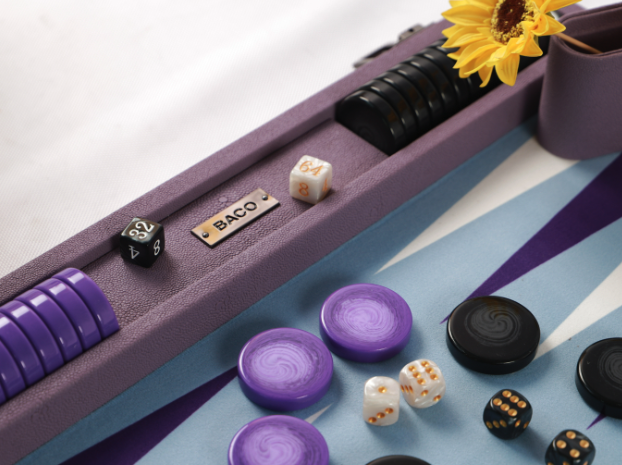
We simulate years of play by repeatedly sliding checkers across the board. Dice impacts are recreated to mimic tournament conditions. Abrasion tests help measure how the surface holds up over time. Boards show different wear patterns depending on material: wood may scratch but stay firm, leather develops patina, and cork or fabric can compress or pit. Tracking surface degradation tells us which boards will last decades.
| Material | Scratch Resistance | Checker Glide | Dice Impact Noise |
|---|---|---|---|
| Hard Wood | High | Medium | Loud |
| Full-Grain Leather | Medium | High | Soft |
| Cork / Fabric | Low | High | Very Soft |
Portable boards face folding stress daily. We fold corners repeatedly and hold for seconds to check rebound. Crease formation is monitored; boards that flatten permanently fail the test. Hinges are tested for alignment after hundreds of folds. Weak hinges loosen, creating uneven surfaces. Durable boards snap back consistently, keeping gameplay smooth.
Humidity changes affect wood, leather, and composite surfaces differently. Wood may warp, leather can stiffen, composites sometimes delaminate. We expose boards to heat, cold, and fluctuating moisture levels. Color shifts, stiffness, or warping are tracked over weeks to predict long-term behavior. Boards that resist these changes maintain both appearance and functionality.
Edges and corners face chipping, denting, and abrasion during travel or storage. We press, drop, and rub corners to simulate real-world stress. Boards designed for portability need stronger edges. Even minor chipping can affect folding alignment and checker movement. Durable edges mean boards stay playable for years.
| Test Type | Method | Key Measurement |
|---|---|---|
| Corner Dent | Drop Test | Resistance to chipping |
| Edge Compression | Press & Hold | Fiber density and recovery |
| Surface Glide | Sliding Checkers | Smoothness over repeated use |
Start by examining the board closely. Look for natural grain patterns on wood or leather—they indicate authentic material, not synthetic overlays. Check that points are uniform and the playing surface sits flat without bumps. Hinges and folding mechanisms should align precisely; misaligned parts can affect both gameplay and long-term durability.
| Feature | What to Look For | Red Flags |
|---|---|---|
| Wood / Leather Grain | Natural variations, no artificial embossing | Completely uniform texture |
| Points | Even spacing, consistent shape | Irregular or misaligned points |
| Hinges / Folds | Smooth, tight operation | Loose, creaking, or wobbly |
Touch tells a lot. Fold leather boards and see if they rebound without creasing. Slide checkers and roll dice across the surface to test smoothness. Press edges and corners to gauge density and resistance to compression—they should feel solid, not spongy or layered.
Fold recovery: hold a corner folded for 10 seconds; it should snap back quickly.
Surface glide: checkers move smoothly across all points.
Edge/Corner test: press and release; no permanent dents or splits.
Knowing where materials come from is crucial. Traceable tanneries ensure leather is full-grain and vegetable-tanned. Sustainable wood sources signal environmental responsibility. Always check warranty and durability guarantees; serious manufacturers stand behind long-term performance. Reputation in the backgammon community matters—boards endorsed by collectors or tournament players are usually more reliable.
Evaluation Checklist:
Named tanneries or timber suppliers.
Warranty covering structural integrity, not just surface damage.
Positive community reviews or tournament use.
Certifications like LWG or FSC for leather and wood.
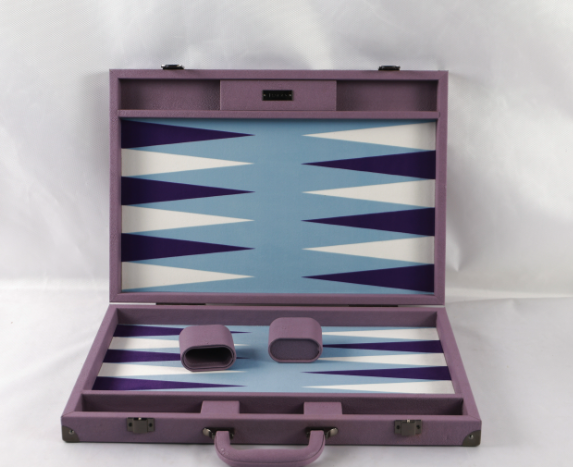
A: A premium board made from full-grain vegetable-tanned leather or solid wood can last 20–30 years or more with proper care.
A: Yes, if hinges and materials are high-quality, folding boards can endure frequent use, though cheap hinges may weaken faster.
A: Rarely; they often have inconsistent fiber density or surface texture, making them better for display than serious play.
A: No; optimal thickness (1.2–1.6mm) combined with dense, full-grain leather offers better flexibility and long-term resilience.
A: Look for coverage on structural integrity, hinge failure, or cracking over at least 10 years, not just cosmetic defects.
Durability directly shapes how every game feels, from smooth checker movement to quiet, consistent dice rolls. Testing for wear, folding stress, moisture resistance, and edge strength ensures your backgammon board stands up to years of play.
At BGM Co., Ltd, we combine premium materials and expert craftsmanship to create boards built for serious players and collectors alike. Explore our selection today and experience how a well-tested, high-quality board transforms every match into a reliable, enjoyable experience.