


Products
Quick Links
About US
FAQ

Copyright © 2026 BGM Co.,Ltd



Views: 0 Author: Site Editor Publish Time: 2025-10-20 Origin: Site


Feature | Description |
|---|---|
Customization Options | Choose colors and materials you like best. |
Quality Materials | Enjoy soft leather and strong acrylic for a nice feel. |
Enhanced Experience | Custom sets make learning and playing more fun. |
Know the goal of backgammon. You must move all your checkers home first. Try to do this before your opponent does.
Set up the board the right way. Put your checkers in the correct pattern. This helps you start the game well.
Use the doubling cube in a smart way. It can raise the stakes. This can help you win more often.
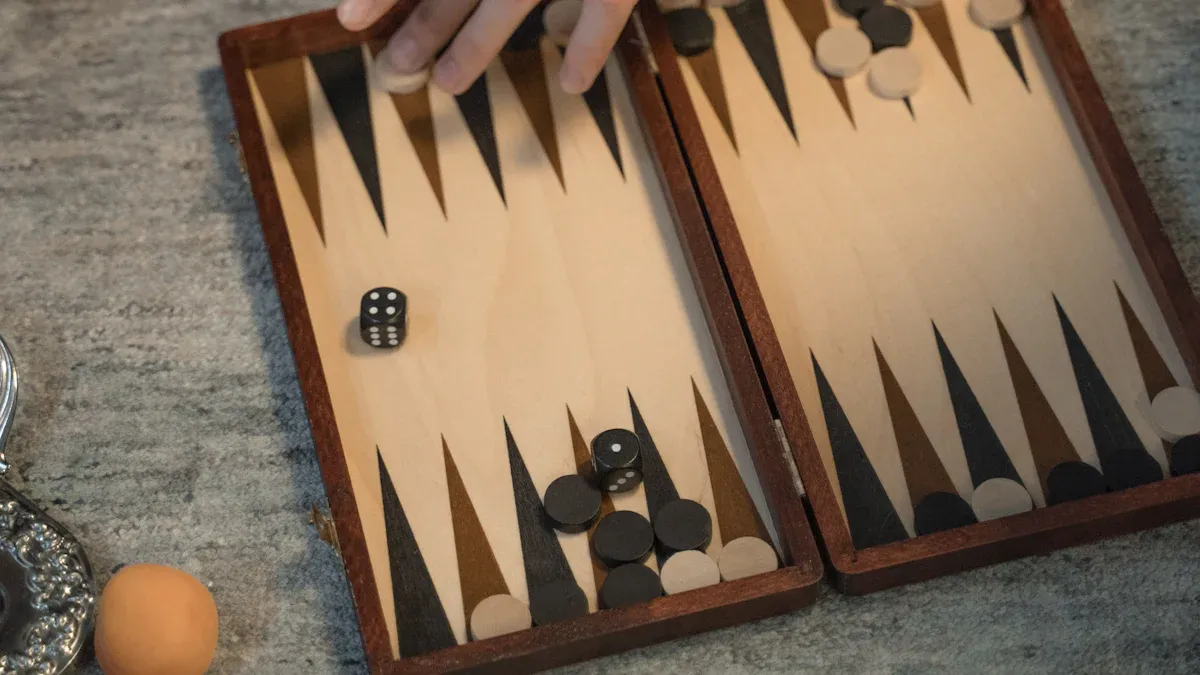
If you want to play backgammon, you need to know the basics first. The game uses a special board, checkers, dice, and a doubling cube. Each player gets 15 checkers. You move your checkers around the board, trying to bring them all home before your opponent does. The board has 24 points, split into four sections. Each section has six triangles, called points. You can only move your checkers to open points. If you leave a checker alone on a point, it becomes a "blot." Your opponent can hit a blot and send it to the bar in the middle of the board.
Here’s a quick look at what you need to play backgammon:
Component | Description |
|---|---|
Backgammon Board | A board featuring 24 points, divided into home and outer boards, with a central bar. |
Checkers | Each player has 15 checkers, usually in different colors. |
Dice | Two dice for movement, plus a doubling cube for raising stakes. |
Initial Placement | Checkers start on specific points on the board. |
Bar | The divider in the center where hit checkers go. |
When you use a Custom Backgammon Set from FSS International Manufacturer group, you get a board that feels great and looks amazing. The smooth leather and bright colors make learning the backgammon basics even more fun.
Setting up the board is easy once you know how to play. Each player places their checkers in a special pattern. The board has four quadrants, and each one has six points. You and your opponent sit across from each other. Your home board is on your right side.
Follow these steps to set up your checkers:
Place five checkers on your 6-point.
Place three checkers on your 8-point.
Place five checkers on your 13-point.
Place two checkers on your 24-point.
You should see your checkers spread out across the board. Your opponent sets up their checkers in the same way, but on their side. If you use a custom set from FSS International Manufacturer group, the clear markings and smooth surfaces help you set up quickly and start playing right away.
Before you start to play backgammon, you need to decide who goes first. Here’s how you do it:
Before the first turn, each player rolls just one die. The player with the higher number goes first and that player uses the two numbers that were rolled to make their move. If the numbers are the same, no player takes the first turn and the players again each roll one die to determine who goes first. (Accordingly, it is impossible to roll doubles on the first move.)
The first roll is important. It sets the tone for the rest of the game. Many beginners find that learning the effects of opening moves helps them play better. Some dice rolls have best moves, so pay attention and try to remember what works.
Once you know how to play backgammon, you will spend most of your time moving checkers. Each turn, you roll two dice. The numbers you roll tell you how many spaces you can move your checkers. You can split the numbers between two checkers or move one checker twice. If you roll doubles, you get to move four times instead of two.
Here’s how to move your checkers step by step:
Roll two dice at the start of your turn.
Move your checkers forward to lower-numbered points, using the numbers on the dice.
Only move to open points. An open point has zero or one of your opponent’s checkers.
Use both numbers if you can. If you can’t, use the higher number.
If you roll doubles, play the numbers on the dice twice.
If you land on a point with one of your opponent’s checkers, you hit it and send it to the bar.
If you have a checker on the bar, you must enter it before making other moves.
Once all your checkers are in your home board, you can start bearing off.
Tip: Don’t bury your checkers deep in your home board too soon. Try not to stack too many checkers on one point. Keep your checkers spread out so you have more options.
Hitting happens when you land on a blot, which is a point with only one of your opponent’s checkers. When you hit, you send that checker to the bar. Your opponent must then enter that checker back into your home board before making any other moves.
To enter a checker from the bar, your opponent must roll a number that matches an open point in your home board.
If they roll a 4 and a 6, they can enter on your four-point or six-point, if those points are open.
If both points are blocked, your opponent loses their turn.
If they have more than one checker on the bar, they must enter as many as possible.
After entering all checkers, any unused dice numbers can be used to move other checkers.
You must always enter your checkers from the bar before making any other moves. The number you need to enter must show up on at least one die. If you can’t enter all your checkers, you forfeit the rest of your turn.
When all your checkers are in your home board, you can start bearing off. This means you remove your checkers from the board by rolling the right numbers.
All checkers must be in your home board before you can bear off.
You can only bear off a checker if you roll the number that matches its point.
If you roll a number higher than any occupied point, you can bear off from the highest point.
The first player to bear off all their checkers wins the game.
If your opponent has not borne off any checkers, you win a gammon.
If your opponent still has checkers on the bar or in your home board, you win a backgammon.
Playing on a Custom Backgammon Set from FSS International Manufacturer group makes every step, from setup to bearing off, feel special. The smooth dice, clear points, and sturdy checkers help you focus on the fun and strategy of the game.
Remember: The more you play backgammon, the better you get. Practice these steps, and soon you’ll feel confident every time you sit down to play.
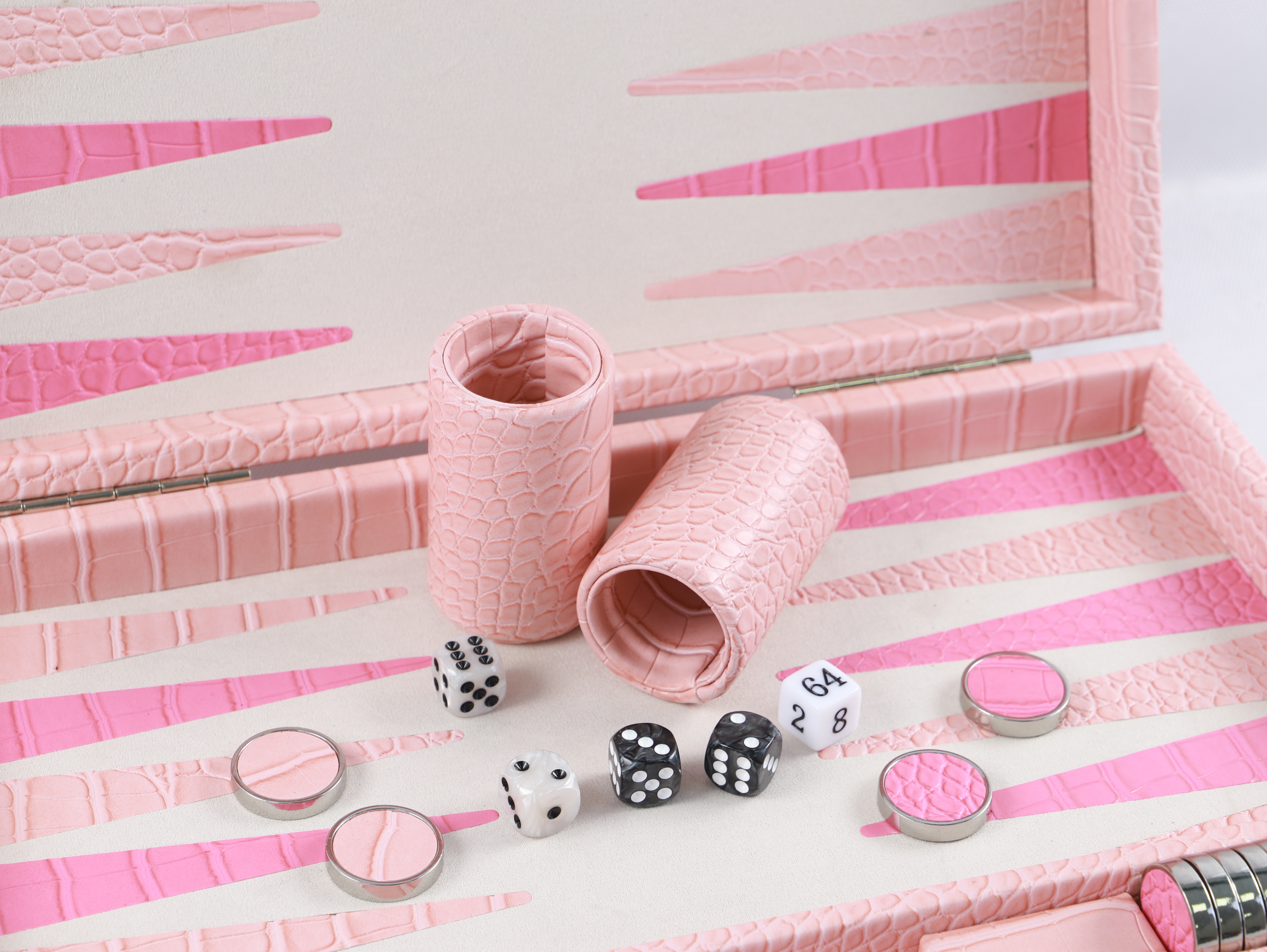
Backgammon scoring can seem tricky at first, but you’ll get the hang of it quickly. The doubling cube lets you raise the stakes during a game. Here’s how it works:
The game starts with a stake of one point, but the doubling cube can increase it to two, four, or even more.
If your opponent offers a double, you can accept and play for higher stakes or pass and lose the current stake.
Winning a gammon (when your opponent hasn’t borne off any checkers) doubles the points. Winning a backgammon (when your opponent still has checkers on the bar or in your home board) triples the points.
The doubling cube adds excitement and strategy. If you think you have at least a 25% chance to win, you should usually accept a double. Offer a double when you feel your chances are strong—about 70% or more.
Try these strategies to boost your chances:
If you’re ahead, race your checkers home. If you’re behind, play a back game.
Don’t stack too many checkers on one point.
Hit blots and secure points whenever you can.
Build a wall (prime) to block your opponent.
Always try to make the 5-point.
Stay patient and review your moves.
Experts say beginners often miss better moves by focusing too much on certain numbers. Always look at all your options before you decide. Trust your gut if a move feels off.
Stacking too many checkers or burying them can make it hard to adapt. You want to keep your checkers flexible and ready for action.
Accept a double if your winning chance is at least 25%.
Don’t bury checkers early; keep your options open.
Bear off checkers when you can, but don’t rush.
Practice with a quality custom set from FSS International Manufacturer group. A smooth, well-marked board helps you focus and learn faster.
This ultimate guide gives you the basics and tips you need to start winning and having fun!
You now know the basics of backgammon. Here are some key tips to remember:
Bear off checkers when all are home.
Use doubles for extra moves.
Watch your pip count.
Build a prime.
Keep an anchor.
Balance attack and defense.
Practice makes you better! Try focusing on one skill at a time. You will see progress quickly. Using a Custom Backgammon Set from FSS International Manufacturer group can make every game feel special.
Motivational Statement | Author |
|---|---|
Backgammon is a gambling game which requires both luck and skill. Luck keeps the game interesting, but skillful play will always be rewarded. | Paul Magriel |
The way to become a good player is to learn to make good moves. If you make better moves than your opponents, you will win in the long run. | Paul Magriel |
In any case, the best way to learn backgammon is to play it. | Paul Magriel |
Ready to play? Grab your board and enjoy the game!
You want to move all your checkers into your home board and bear them off before your opponent does. That is the main objective of backgammon.
You start by rolling one die each. The player with the higher number goes first. This is called starting the game. Then you use both dice to move.
You move checkers based on the numbers you roll. You can split moves between two checkers or use both numbers for one. Always follow the basic backgammon rules.